Sir Wilfrid Laurier CAS Handbook 2018
“…if you believe in something, you must not just think or talk or write, but must act.”
(Peterson 2003)
 CAS is at the heart of the Diploma Programme. With its holistic approach, CAS is designed to strengthen and extend students’ personal and interpersonal learning from the PYP and MYP.
CAS is organized around the three strands of creativity, activity and service defined as follows.
- Creativity—exploring and extending ideas leading to an original or interpretive product or performance
- Activity—physical exertion contributing to a healthy lifestyle
- Service—collaborative and reciprocal engagement with the community in response to an authentic need
As a shining beacon of our values, CAS enables students to demonstrate attributes of the IB learner profile in real and practical ways, to grow as unique individuals and to recognize their role in relation to others. Students develop skills, attitudes and dispositions through a variety of individual and group experiences that provide students with opportunities to explore their interests and express their passions, personalities and perspectives. CAS complements a challenging academic programme in a holistic way, providing opportunities for self-determination, collaboration, accomplishment and enjoyment.
The aims are to enable students to:
Within the Diploma Programme, CAS provides the main opportunity to develop many of the attributes described in the IB learner profile. For this reason, the aims of CAS have been written in a form that highlights their connections with the IB learner profile.
The CAS programme aims to develop students who are:
- enjoy and find significance in a range of CAS experiences
- purposefully reflect upon their experiences
- identify goals, develop strategies and determine further actions for personal growth
- explore new possibilities, embrace new challenges and adapt to new roles
- actively participate in planned, sustained, and collaborative CAS projects
- understand they are members of local and global communities with responsibilities towards each other and the environment.
Learning outcomes
Learning outcomes are differentiated from assessment objectives because they are not rated on a scale.
The completion decision for the school in relation to each student is, simply, “Have these outcomes been achieved?”
As a result of their CAS experience as a whole, including their reflections, there should be evidence that students have:
- increased their awareness of their own strengths and areas for growth: They are able to see themselves as individuals with various skills and abilities, some more developed than others, and understand that they can make choices about how they wish to move forward.
- undertaken new challenges: A new challenge may be an unfamiliar activity, or an extension to an existing one.
- planned and initiated activities: Planning and initiation will often be in collaboration with others. It can be shown in activities that are part of larger projects, for example, ongoing school activities in the local community, as well as in small student‑led activities.
- worked collaboratively with others: Collaboration can be shown in many different activities, such as team sports, playing music in a band, or helping in a kindergarten. At least one project, involving collaboration and the integration of at least two of creativity, action and service, is required.
- shown perseverance and commitment in their activities: At a minimum, this implies attending regularly and accepting a share of the responsibility for dealing with problems that arise in the course of activities.
- engaged with issues of global importance: Students may be involved in international projects but there are many global issues that can be acted upon locally or nationally (for example, environmental concerns, caring for the elderly).
- considered the ethical implications of their actions: Ethical decisions arise in almost any CAS activity (for example, on the sports field, in musical composition, in relationships with others involved in service activities). Evidence of thinking about ethical issues can be shown in various ways, including journal entries and conversations with CAS advisers.
All seven outcomes must be present for a student to complete the CAS requirement. Some may be demonstrated many times, in a variety of activities, but completion requires only that there is some evidence for every outcome.
CAS and Theory of Knowledge
Both CAS and theory of knowledge (TOK) emphasize the importance of reflection and developing self‑awareness. CAS reflection flows from experience, from thinking about how an activity feels and what it means to everyone involved. In TOK the approach to knowledge issues tends more towards the abstract and theoretical. The links can nevertheless be very close. For instance, a difficult decision about how to behave towards another person or group in a CAS activity might be informed by a TOK consideration of analogous situations; conversely, such a decision might provide a concrete example to illustrate an ethical dilemma in the context of a TOK discussion.
International Dimensions
The aim of all IB programmes is to develop internationally minded people who, recognizing their common humanity and shared guardianship of the planet, help to create a better and more peaceful world. IB learner profile booklet (March 2006)
Creating “a better and more peaceful world” is a large aim. Working towards it should be seen as involving many small steps, which may be taken locally, nationally or internationally. It is important to see activities in a broader context, bearing in mind the maxim “Think globally, act locally”. Working with people from different social or cultural backgrounds in the vicinity of the school can do as much to increase mutual understanding as large international projects.
CAS and Ethical Education
There are many definitions of ethical education. The more interesting ones acknowledge that it involves more than simply “learning about ethics”. Meaningful ethical education—the development of ethical beings—happens only when people’s feelings and behaviour change, as well as their ideas.
Because it involves real activities with significant outcomes, CAS provides a major opportunity for ethical education, understood as involving principles, attitudes and behaviour. The emphasis in CAS is on helping students to develop their own identities, in accordance with the ethical principles embodied in the IB mission statement and the IB learner profile. Various ethical issues will arise naturally in the course of CAS activities, and may be experienced as challenges to a student’s ideas, instinctive responses or ways of behaving (for example, towards other people). In the context of CAS, schools have a specific responsibility to support students’ personal growth as they think, feel and act their way through ethical issues.
From Diploma Programme Creativity, action, service guide, International Baccalaureate, Cardiff, Wales, 2008
Examples of Creativity, Action & Service


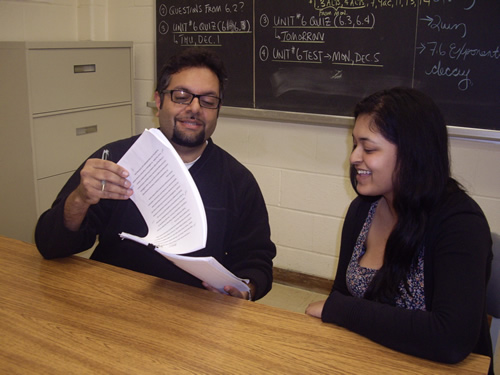 The extended essay is an in-depth study of a focused topic chosen from the list of approved Diploma Programme subjects—normally one of the student’s six chosen subjects for the IB diploma. It is intended to promote high-level research and writing skills, intellectual discovery and creativity. It provides students with an opportunity to engage in personal research in a topic of their own choice, under the guidance of a supervisor (a teacher in the school). This leads to a major piece of formally presented, structured writing, in which ideas and findings are communicated in a reasoned and coherent manner, appropriate to the subject chosen. It is recommended that completion of the written essay is followed by a short, concluding interview, or viva voce, with the supervisor.